
How to Dance at Your Wedding A Guide for Kansas City Couples
Never danced before? You are in good company. Here is how to pick a song, learn a few simple steps and enjoy your first dance instead of dreading it.
- For
- Couples, parents, wedding parties
- Covers
- Timing, songs, steps, nerves
- Start
- Ideally 2–3 months ahead
- You need
- A song, a few steps, some practice
A first dance guide
Most Couples Aren't Dancers. That's Completely Normal.
If the thought of everyone watching your first dance makes you nervous, you are not alone. Most wedding couples are complete beginners.
The good news: a lovely first dance does not need fancy footwork. It needs a song you both love, a few simple steps you can do without thinking, and a little practice together.
This guide walks through it all: when to start, how to choose your song, the basic steps, parent and wedding party dances, and how to handle nerves and shoes on the day. Use it on your own, or bring your questions to a lesson.


When to start
A Simple Timeline for Your First Dance
-
Before Lessons Begin
Choose your song and decide on the feel: a relaxed sway, a classic dance or something more choreographed.
-
Two to Three Months Out
Start learning. Beginning now leaves time to learn the basics without rushing, around everything else on the list.
-
The Last Few Weeks
Put the dance together from start to finish and practise often. Ten minutes in the kitchen a few times a week really helps.
-
The Final Week
Run through it in your wedding shoes, and in the dress if you can. Then stop polishing and look forward to it.
Choosing the music
How to Pick Your First Dance Song
Start with a song that means something to you both. Then check it against a few practical questions before you commit.
-
Can you both hear a steady beat to step or sway to?
-
Is the tempo comfortable? Slow songs suit a sway, Waltz or Rumba; livelier ones suit Foxtrot or Swing.
-
How long is it? Many couples trim their song to two or three minutes.
-
Do the lyrics suit the moment all the way through, not just the chorus?
-
Will a band or DJ play it? Agree on the version, length and ending with them.
-
Would you like guests to join you on the floor before the song ends?
The basics
Simple Steps for Your First Dance
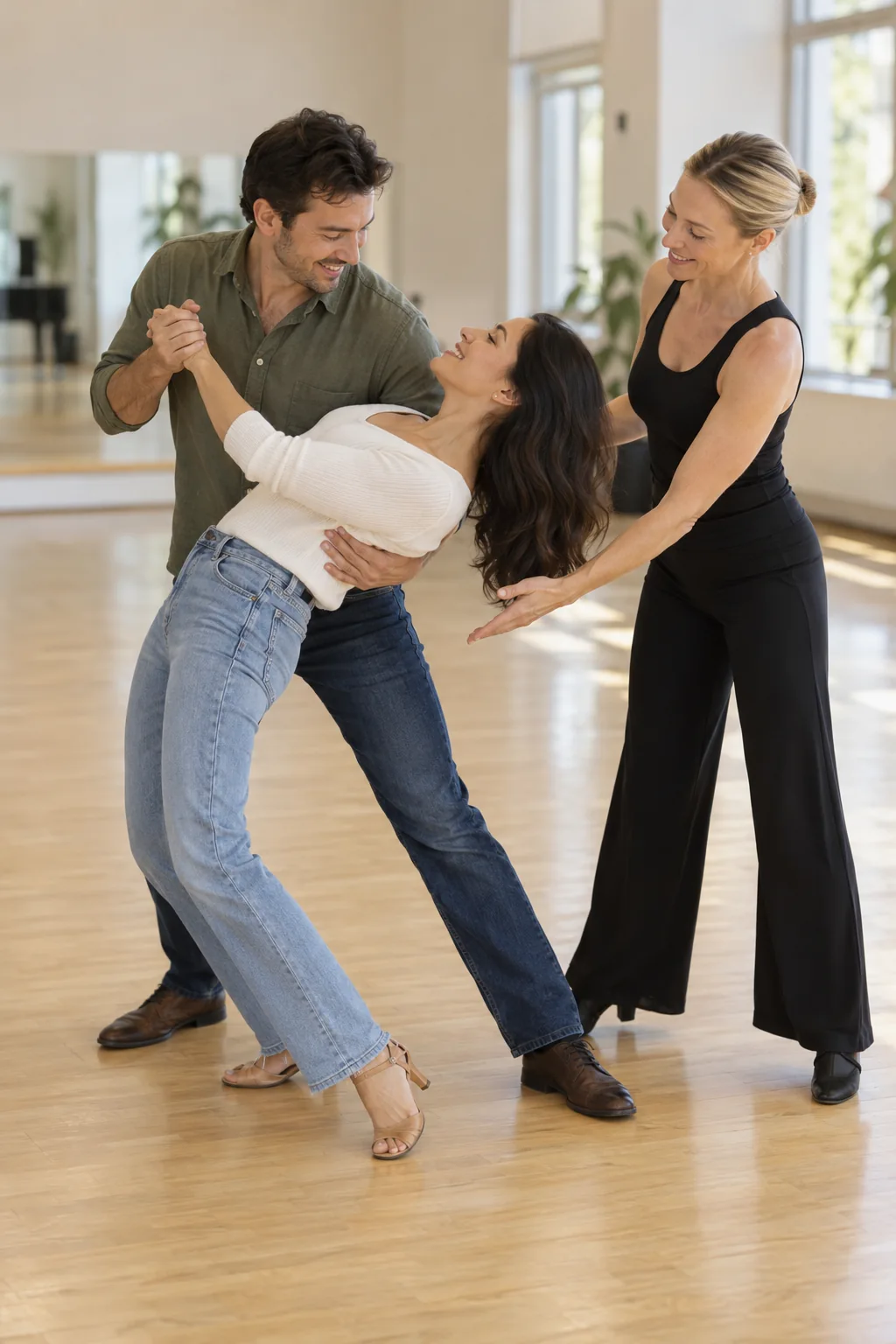
You do not need a routine. These four building blocks are enough for a first dance that looks relaxed and romantic.
-
Find a Comfortable Hold
Join one pair of hands; the other hands rest on a shoulder blade and an upper arm. Stand close, stand tall and keep your elbows soft.
-
The Basic Sway
Step side to side with the beat, moving your weight fully from one foot to the other. Turn slowly as a couple to face different sides of the room.
-
A Simple Box Step
Forward, side, together; back, side, together. It is the heart of the Waltz, and with a different rhythm it carries you through a Foxtrot or Rumba.
-
One Turn and a Clear Finish
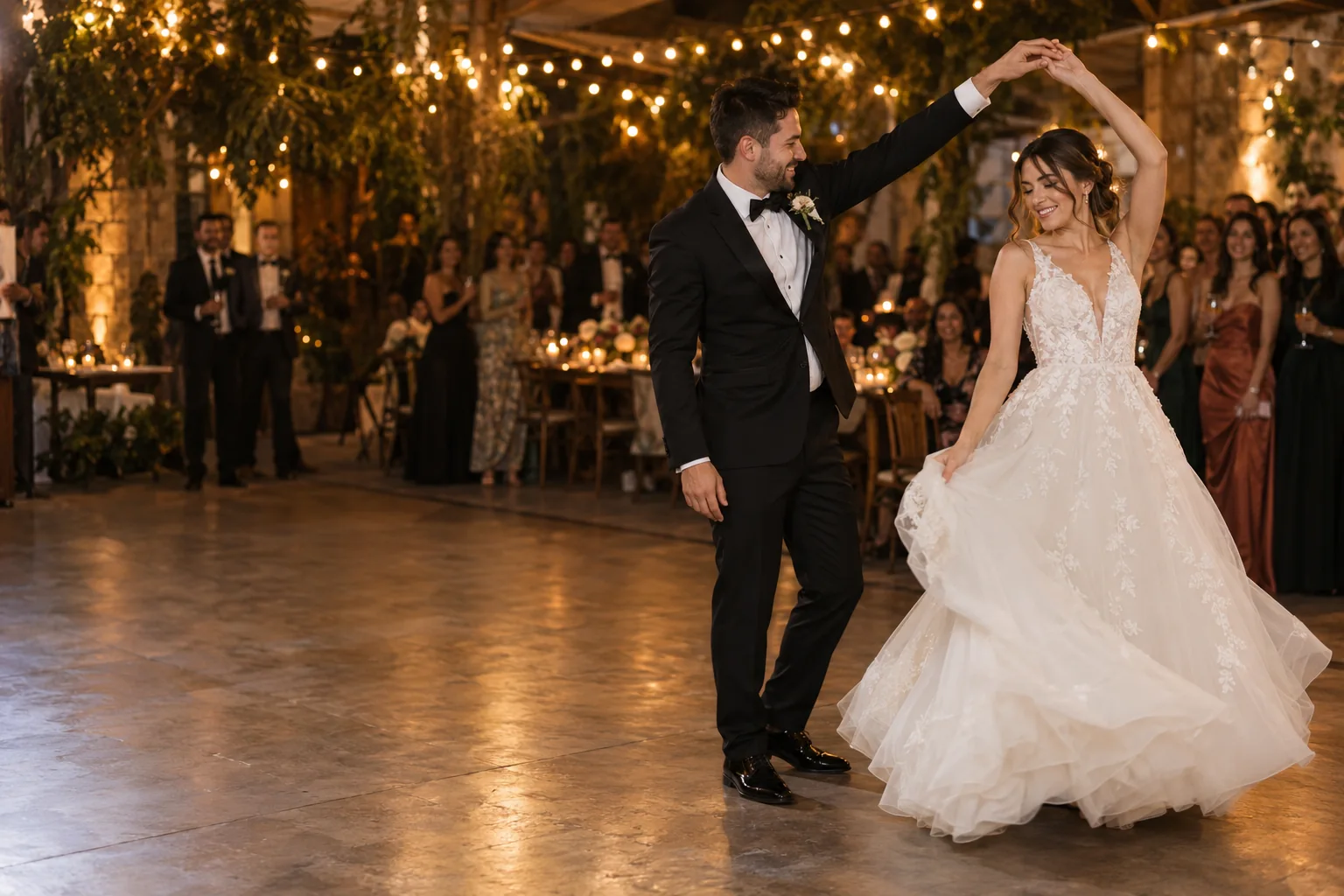
An underarm turn in the middle and a planned ending, such as a dip, a kiss or a bow, give the dance a shape. Your photographer will thank you.
Beyond the first dance
Parent Dances and the Wedding Party
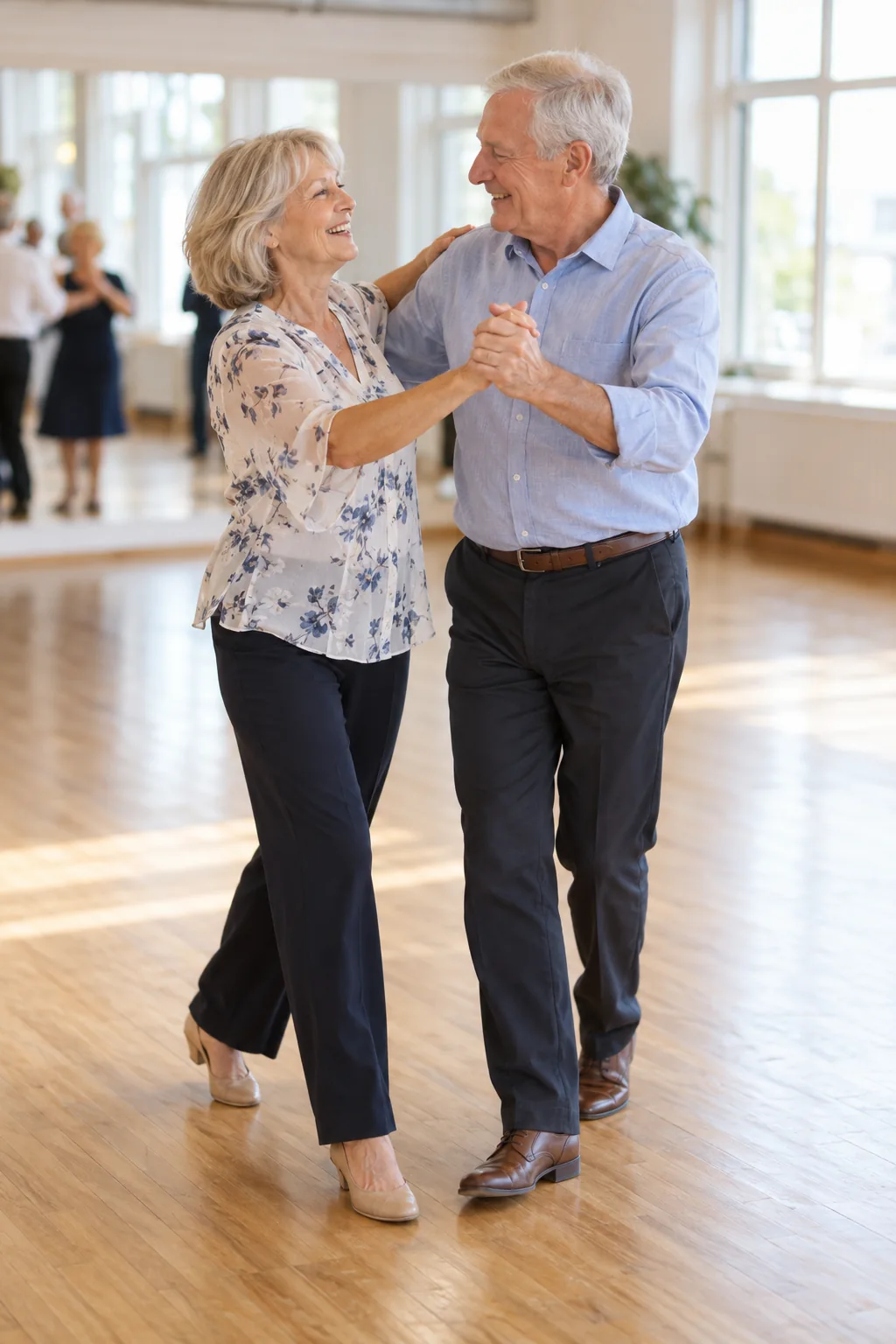
Yours is not the only dance everyone will be watching. The same rule applies to all of them: keep it simple, and practise once or twice before the day.
-
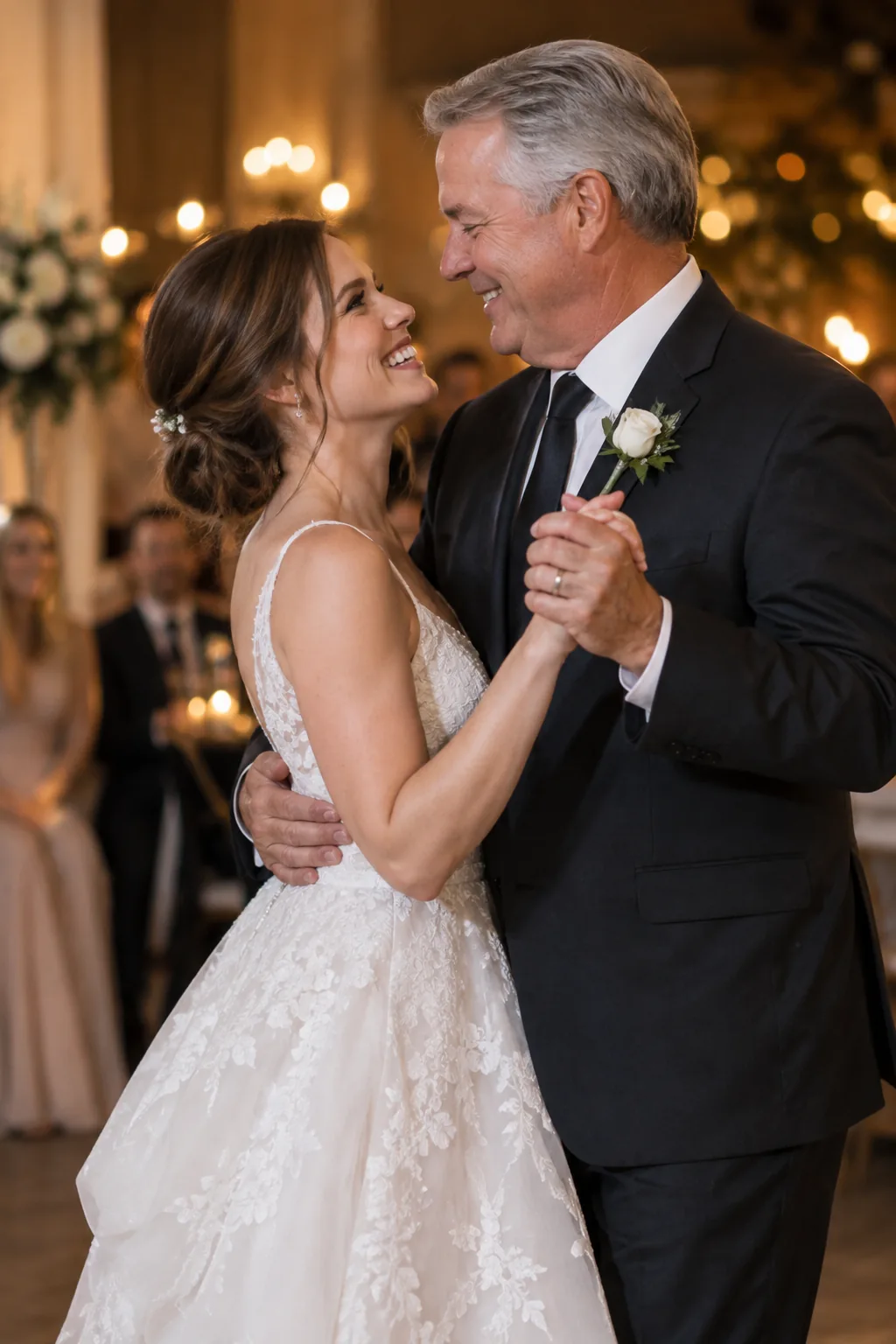
Father–Daughter and Mother–Son Dances
A comfortable hold, a gentle sway and one turn are plenty. Choose the song together, and agree in advance whether guests join in halfway.
-
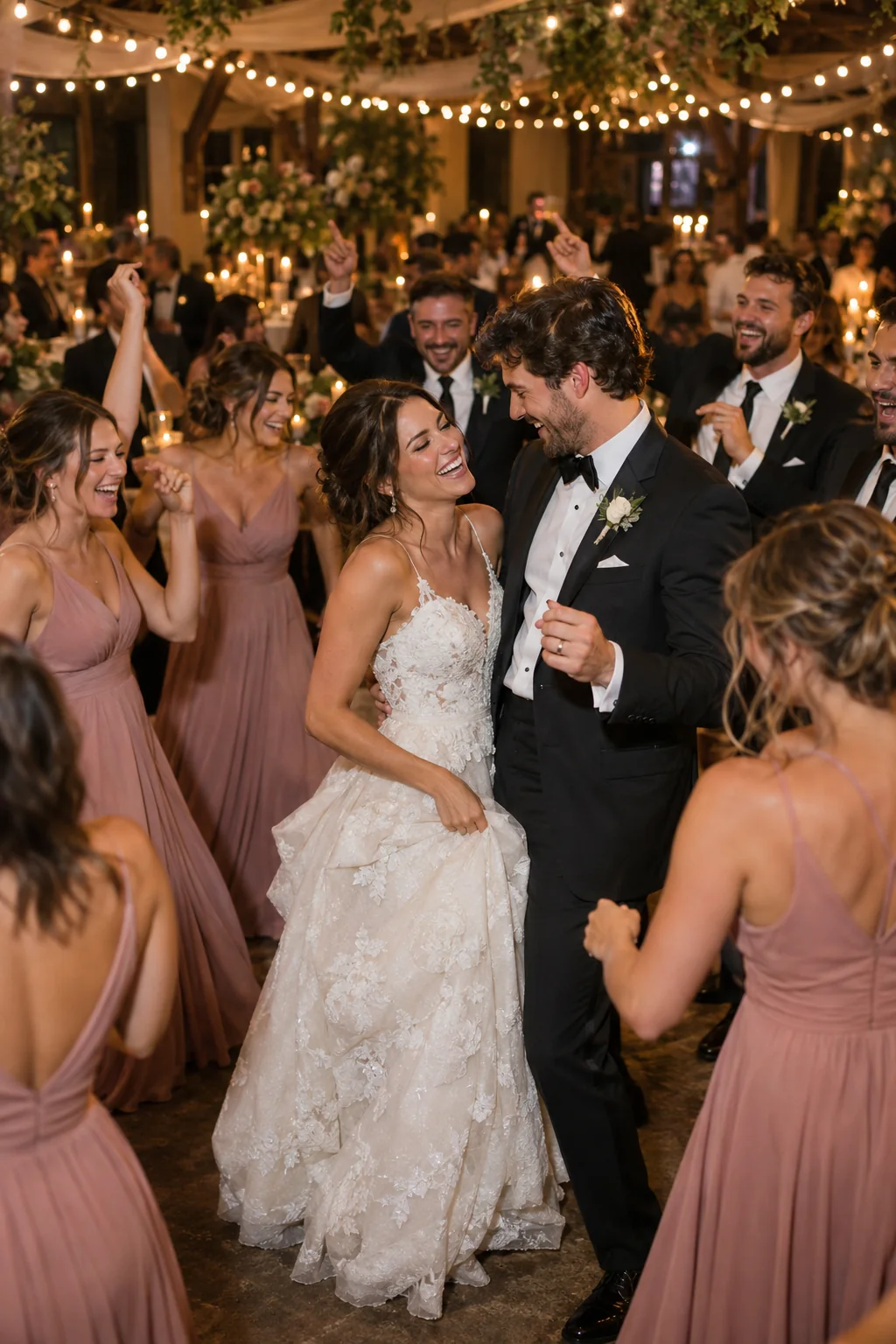
The Wedding Party
A short entrance or group routine works best when it is easy to remember. Keep the steps simple, and rehearse together once everyone has arrived.
-
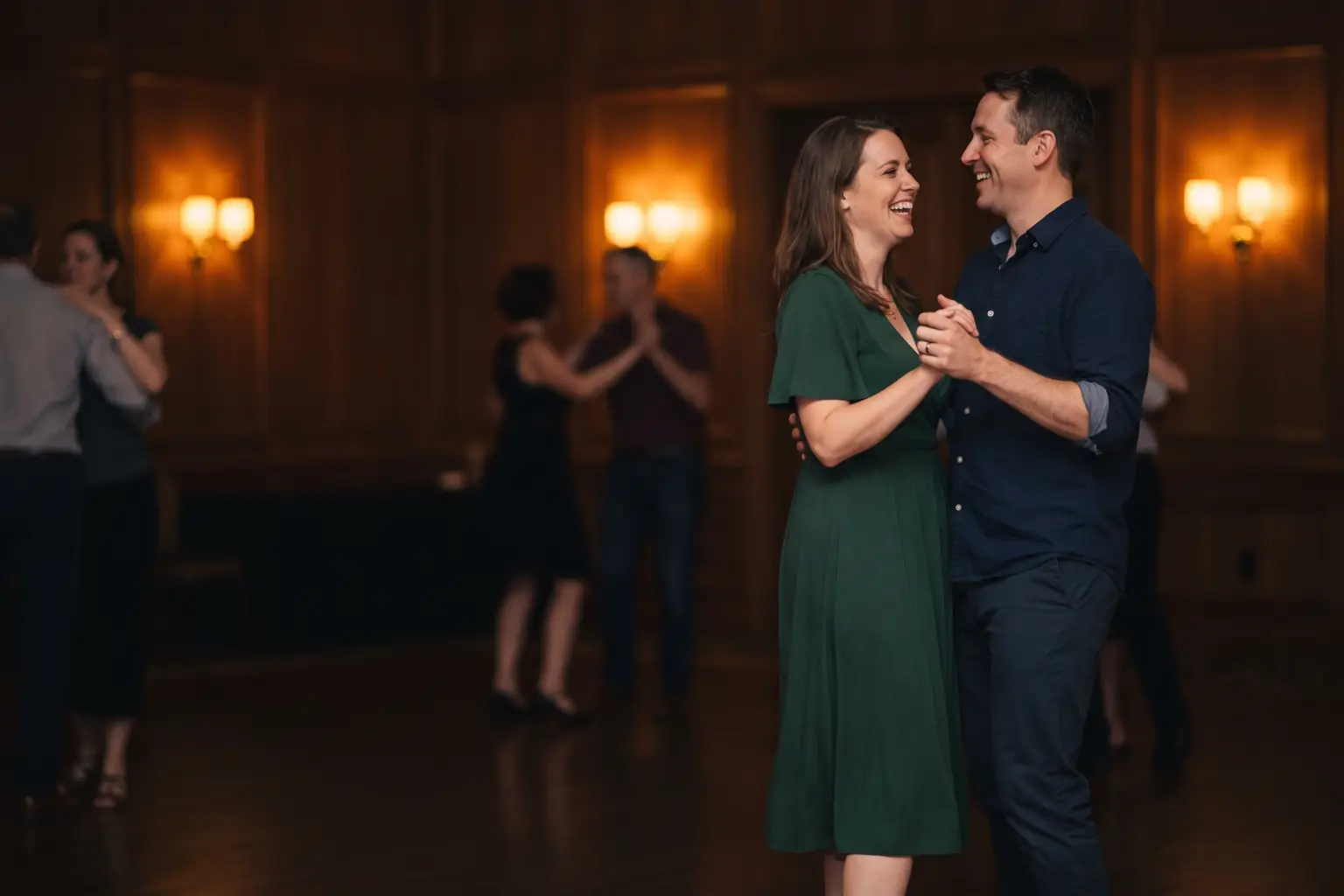
Getting Everyone on the Floor
Invite parents and the wedding party to join you near the end of your song. It shortens the spotlight and fills the floor for the rest of the night.

Planning lessons
How Many Lessons Do Couples Usually Take?
It depends on where you are starting and how polished you would like the dance to look. As a rough guide:
-
A Simple, Relaxed Dance
A comfortable sway with a turn and a finish needs the fewest lessons.
-
A Classic Ballroom Dance
A Waltz, Foxtrot or Rumba with some variety usually means more lessons, spread over a couple of months.
-
A Choreographed Routine
A full routine to your song, perhaps with a medley or a surprise change of pace, takes the longest. Start early and practise between lessons.

On the day
Nerves, Shoes and Other Small Things
A few practical tips that make a big difference once the music starts.
-
Nervous? Look at Each Other
Keep your eyes on your partner, smile and talk while you dance. The room fades away faster than you expect.
-
Missed a Step? Keep Going
Your guests do not know the plan. Keep moving with the music and pick up where you can; nobody will notice.
-
Practise in Your Wedding Shoes
Break them in at home and bring them to a lesson. Smooth soles turn easily; very slippery new soles can be scuffed lightly first.
-
Check the Dress and the Floor
Practise with a long skirt or train, know where the bustle loops are, and ask your venue how big the dance floor is.
Wedding dance lessons in Kansas City
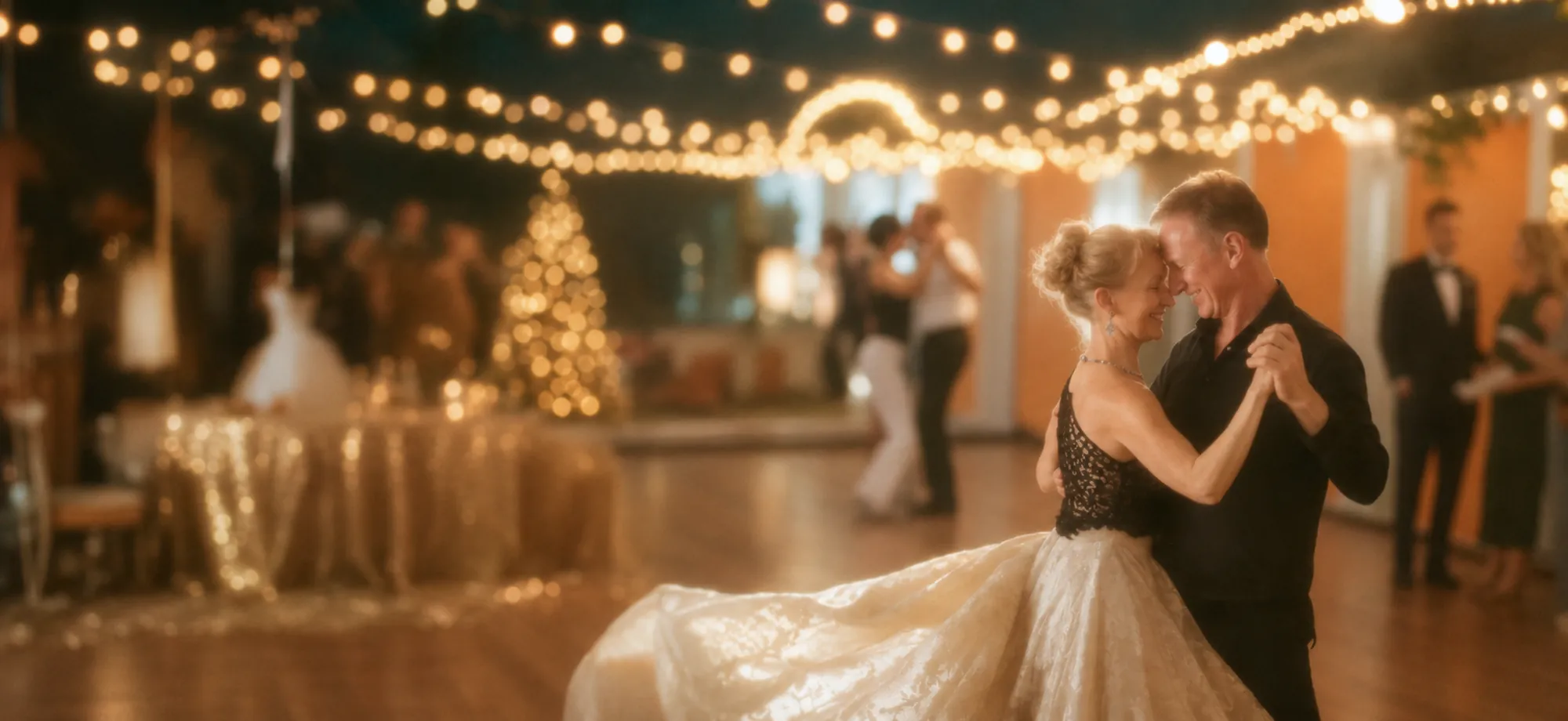
Your First Dance. Your Song. Your Moment.
Whether you want a simple, romantic dance or a fully choreographed one, our instructors will help you feel comfortable and confident. No dance experience? That's exactly why we're here.
- A dance built around your song and your date
- Parent and wedding party dances too
- Your first lesson is free
Good to know
Wedding Dance Questions, Answered
The questions couples ask most before their first dance. Something we missed? Call us on (913) 599-4444.
How far before the wedding should we start dance lessons?
Two to three months before the wedding is ideal: it gives you time to learn without rushing. That said, we can work with any timeline, so tell us your date and we will plan around it.
How many lessons do we need for a first dance?
It depends on your starting point and the dance you want. A simple, relaxed dance needs fewer lessons than a choreographed routine. After a first lesson, an instructor can suggest a plan that fits your date.
What if one of us has two left feet?
That is very common, and nothing to worry about. A first dance is built from simple steps taught slowly, so both of you can feel comfortable. You don't need to be dancers; you just need to start.
Should we sway or learn a choreographed routine?
Whatever feels most like you. A sway with a turn and a dip is lovely, and so is a surprise routine. Something in between works well too, such as a simple Waltz or Rumba with one memorable moment.

Ready to get on the dance floor?
Book Your Free First Lesson
Fill in your details and we will set up your complimentary lesson and consultation at Arthur Murray Kansas City.
- We will contact you to confirm a day and time
- No dance experience needed whatsoever
- No long-term commitment or obligation
Give us a call. Someone from our studio team will be happy to answer your questions, tell you what to expect at your first lesson, and help you get started! (913) 599-4444